Sign in. It’s quick, free and it’s up to you.
An account is an optional way to support the work we do. Find out more.
Sign in. It’s quick, free and it’s up to you.
An account is an optional way to support the work we do. Find out more.
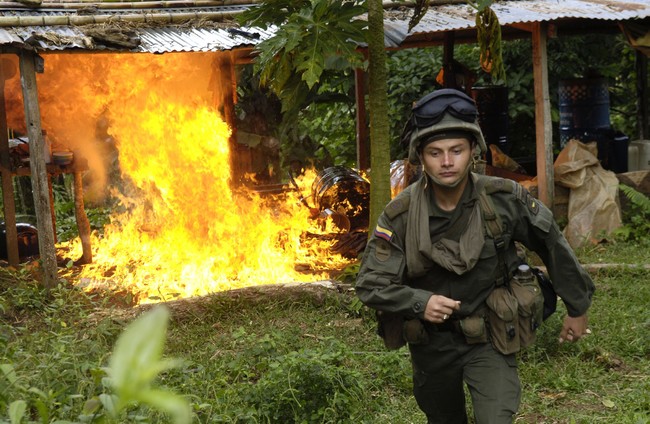
THERE HAS BEEN a massive rise in the amount of cocaine being produced in Colombia with the UN estimating that 866 metric tonnes were manufactured in the last 12 months.
The latest Colombia Cultivation Survey, produced by the UN Office on Drugs and Crime (UNODC) showed an increase of 52% in coca cultivation – from 96,000 hectares in 2015 to 146,000 in 2016.
Regarding the potential production of cocaine for 2016, the estimate was of 866 metric tonnes, an increase of 34% compared to 2015, which saw 646 metric tonnes made.
The head of the UNODC, Bo Mathiasen, said that while the increases were significant, he held out hope for improvement now that Colombia has signed a peace agreement with the biggest rebel group in the country, which controls much of the drug-producing land.
The UN Security Council recently decided unanimously to create a new mission for Colombia to help the former rebels of FARC, the Revolutionary Armed Forces of Colombia, rejoin society as a step to securing the peace process.
For decades FARC guerrillas controlled many of the country’s key coca-growing zones.
Under the peace deal, farmers will receive subsidies to switch from coca to other crops.
Colombia is the leading coca producer in Latin America, followed by Peru and Bolivia, according to the UN report.
A UN mission currently in the country has begun monitoring the destruction of weaponry surrendered by FARC militants starting June 27 as part of the historic peace accord.

To embed this post, copy the code below on your site













have your say